
The Five Elements in Taoism: The Ancient Blueprint for Emotional Balance & Vitality
A foundational guide to the Five Elements in Classical Taoism and the Universal Healing Tao system—explaining the Creation and Control cycles, organ-emotion correspondences, and Qigong movements that bring inner alchemy to life.
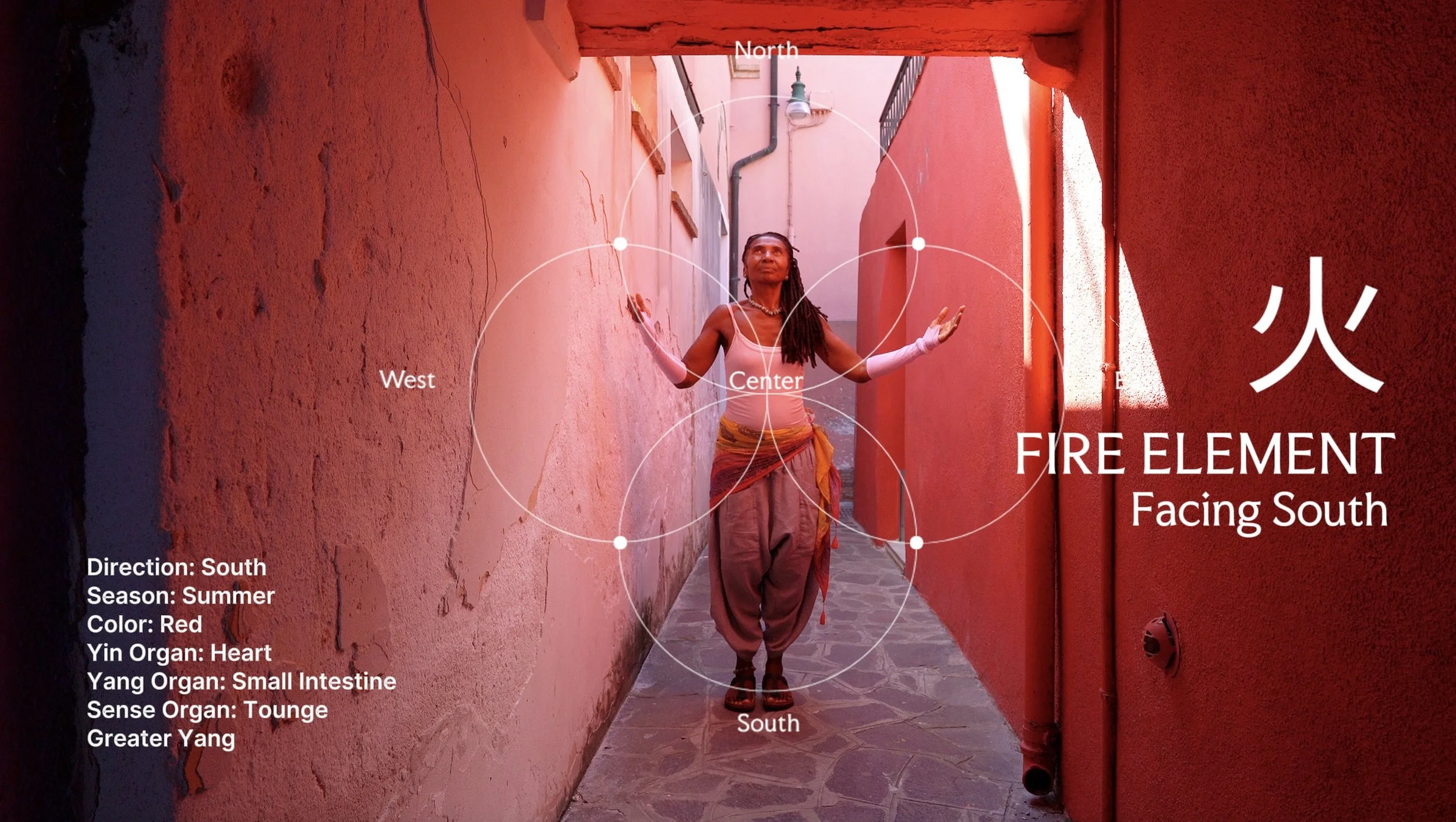
Facing South, Gillian is demonstrating Tai Chi moves corresponding to the Fire Element
Have you ever wondered why certain emotional states—like chronic worry, sudden outbursts of anger, or deep-seated anxiety—seem to settle physically in specific parts of your body? Or why a shift in season can drastically alter your vitality, sleep patterns, and mood?
In Western culture, we tend to categorize mind, body, emotions, and nature into separate compartments. But in Classical Taoism and the Universal Healing Tao (UHT) system—founded globally by Grandmaster Mantak Chia—everything in the universe is woven together through a single, living fabric of vital energy (Chi).
The Five Elements (Five Phases or Wu Xing): Wood, Fire, Earth, Metal, and Water—are not static physical substances. They are dynamic, intelligent phases of elemental transformation that govern the cycles of nature, the health of your internal organs, your emotional landscape, and the fluid movements of Qigong and Tai Chi.
Understanding the Five Elements gives you the master blueprint to your inner ecosystem. It transforms how you view your physical health, providing a practical foundation for all of the internal alchemy practices, Qigong classes, and the 1-on-1 transformational coaching we explore.
1. How the Five Elements Work Together: The Two Sacred Cycles
In Taoist cosmology, health is not a static destination; it is a harmonious state of continuous flow. The Five Elements maintain this balance within nature and inside your body through two primary relationship loops: The Generating (Creation) Cycle and The Controlling (Overcoming) Cycle.
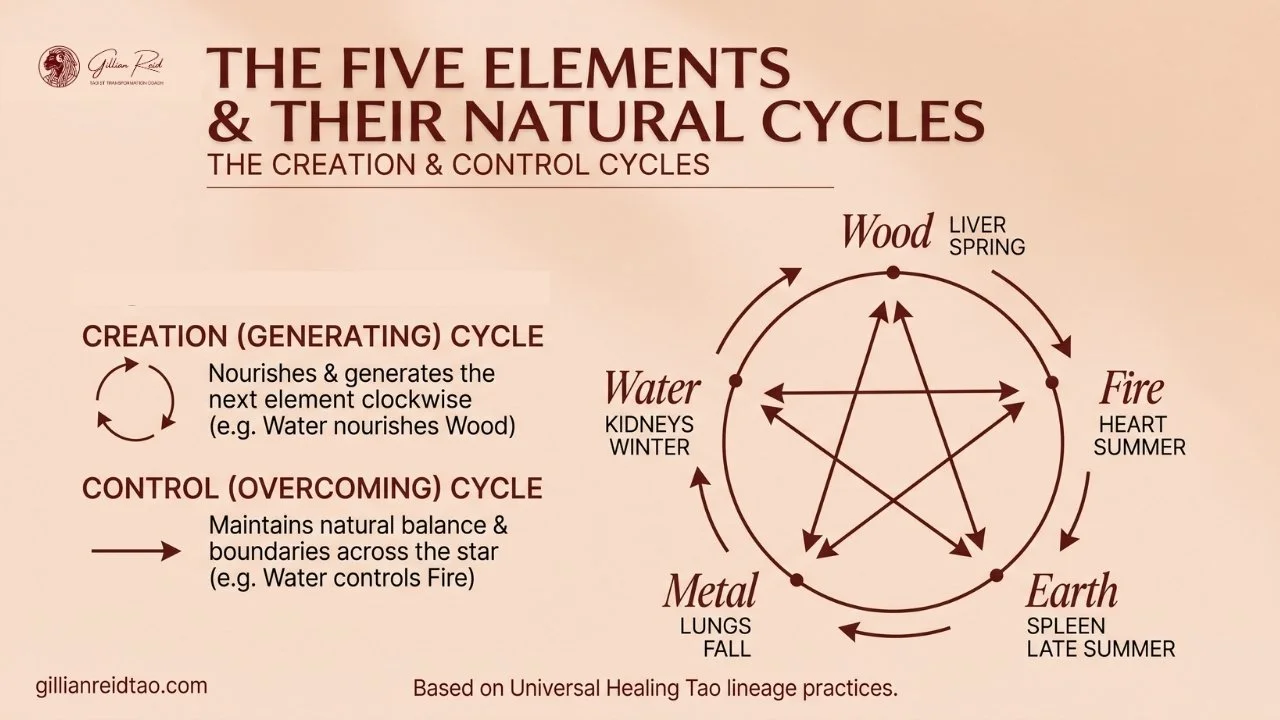
The Five Elements & Their Natural Cycles
A. The Generating Cycle (Sheng Cycle) — The Mother-Child Harmony
The Generating, or Creation, Cycle represents natural growth, nourishment, and encouragement. Just as a mother lovingly feeds and raises her child, each element fuels and gives birth to the next:
Wood feeds Fire: Trees provide fuel for the flame to burn brightly.
Fire creates Earth: Fire burns matter into ash, enriching the fertile soil.
Earth produces Metal: Deep within the earth, minerals and metallic ores condense.
Metal gathers Water: Cool metal surfaces condense moisture, producing water droplets.
Water nourishes Wood: Rain falling from heaven hydrates seeds and trees, allowing Wood to grow.
In your body, if your Water element (Kidneys) is depleted from chronic stress, it cannot nourish your Wood element (Liver), leading to physical stiffness, irritability, and hormonal fatigue.
B. The Controlling Cycle (Ke Cycle) — The Balance of Restraint
Without a gentle system of checks and balances, any single element could grow unchecked and create destructive chaos (such as a wildfire consuming an entire forest). The Controlling Cycle provides protective boundaries:
Wood controls Earth: Tree roots bind the soil, preventing landslides and erosion.
Earth controls Water: Earthen banks and dams contain and direct flowing rivers.
Water controls Fire: Water extinguishes excessive flames.
Fire controls Metal: Intense heat melts and reshapes raw metal.
Metal controls Wood: A sharp metal axe prunes and shapes overgrown trees.
When working with emotional balance in Taoist coaching, we use this Controlling Cycle to heal. For example, if you are consumed by intense Fire (anxiety, over-excitement, racing thoughts), we cultivate cool, grounding Water energy (Kidney wisdom and stillness) to soothe the flames.
2. Element Correspondences: Organs, Negative Emotions & Positive Virtues
In the Universal Healing Tao system, each element corresponds directly to a pair of vital organs (one Yin solid organ and one Yang hollow organ), a pair of reactive emotional states, and an innate spiritual virtue.
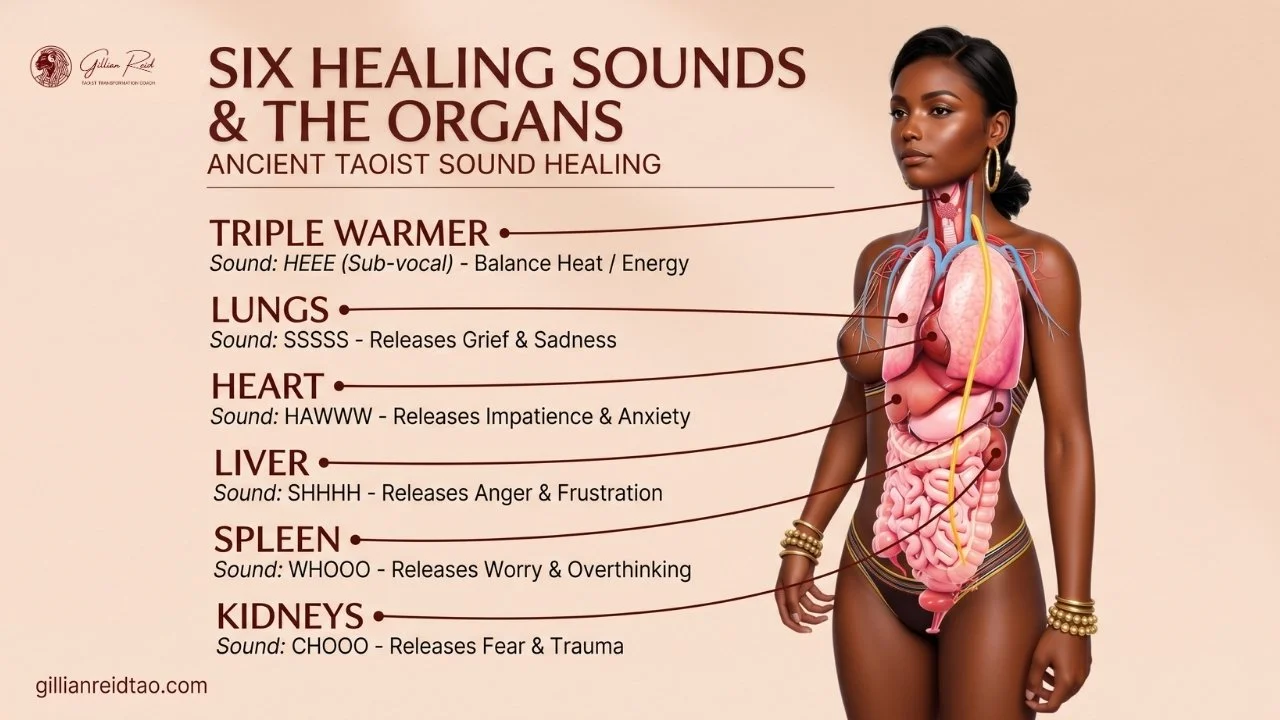
Through practices like the Six Healing Sounds and the Inner Smile, we learn to transform negative emotional toxins trapped in these organs back into their original, radiant virtue (Chi).
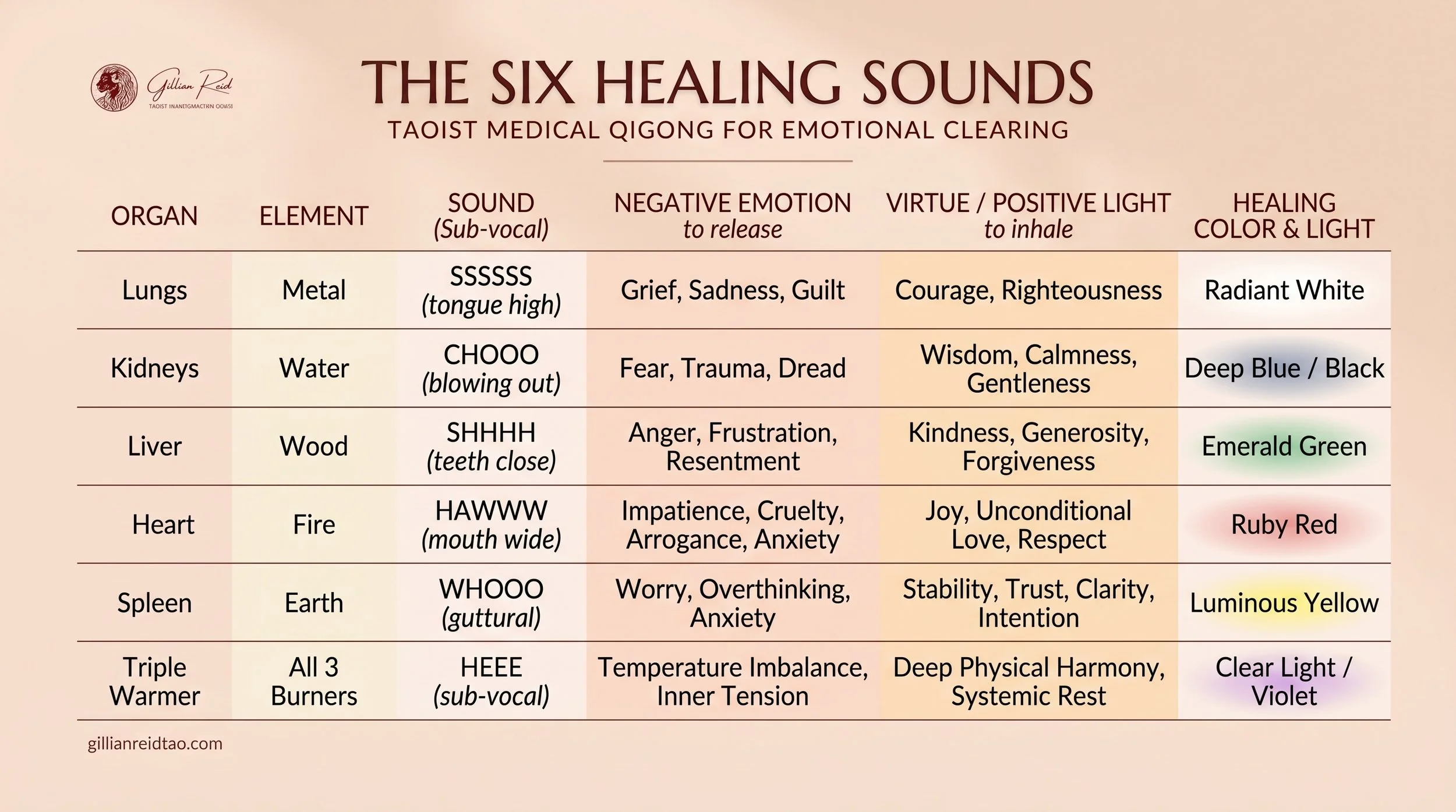
3. The Five Elements in Movement: Qigong & Tai Chi Expressions
The Five Elements are not merely philosophical concepts to memorize—they are felt, physical realities expressed through your body's movement and posture in Tai Chi and Medical Qigong.
In the Universal Healing Tao curriculum, movement translates elemental principles directly into internal structure:
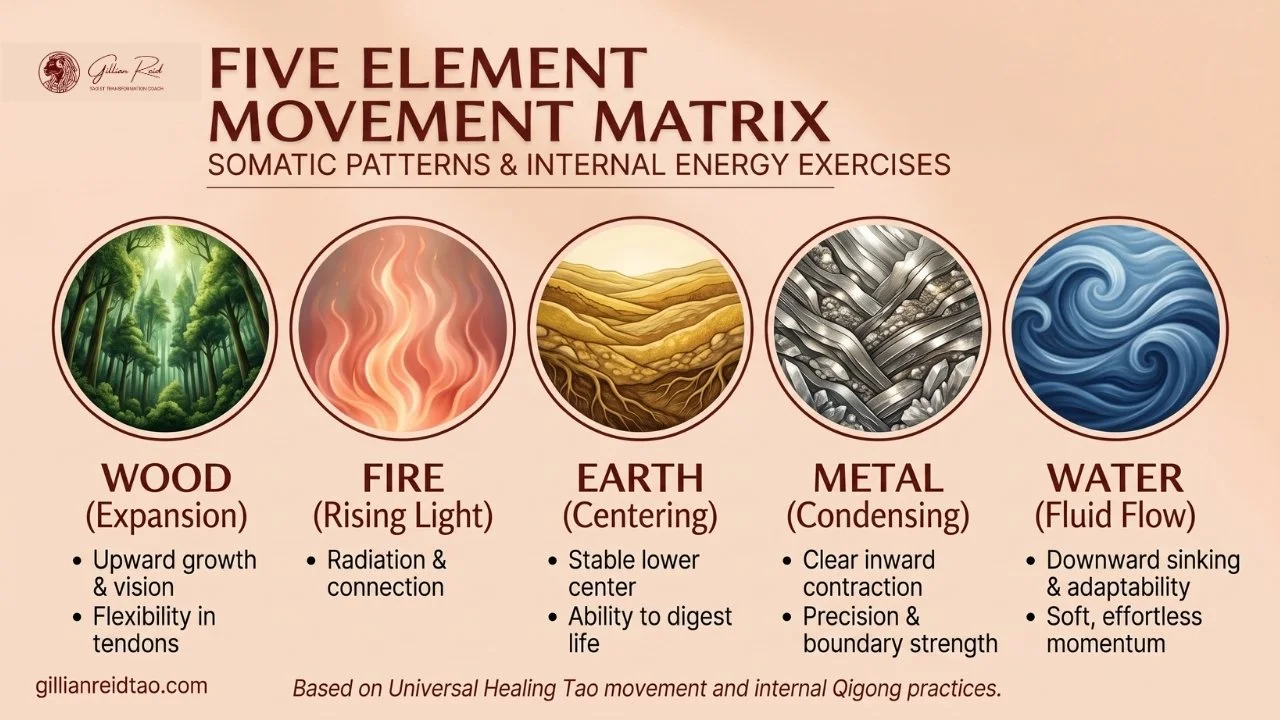
1. Wood Movement — Expansion and Flexibility
Physical Expression: Rooted stance opening upward and outward like a growing tree.
Somatic Focus: Hydrating tendons and ligaments; opening the sides of the ribs to release trapped Liver tension and frustration.
2. Fire Movement — Upward Light and Warmth
Physical Expression: Floating, light movements that expand outward from the Heart center.
Somatic Focus: Circulating blood warmth to the fingertips and face, transforming impatience into open-hearted joy.
3. Earth Movement — Centering and Grounding
Physical Expression: Sinking into a stable horse stance or lower belly center (Tan Tien).
Somatic Focus: Establishing physical equilibrium, soothing overthinking, and feeling completely held by the earth.
4. Metal Movement — Precision and Contracting Strength
Physical Expression: Sharp, crisp movements that draw energy inward toward the chest and core.
Somatic Focus: Expanding lung capacity to take in fresh life force while exhaling grief and emotional baggage.
5. Water Movement — Fluidity and Sinking
Physical Expression: Low, undulating, wave-like movements that trickle through the spine and hips.
Somatic Focus: Sinking stress down into the earth, rehydrating the spinal column, and restoring deep reserves of Jing in the Kidneys.
VIDEO: Excerpt from Gillian’s Tai Chi practice where she guides you through the Tai Chi 13-Step Yang Style form, an ancient dynamic movement that behaves like a deep, energetic nourishhment for your vital organs. By simply rotating your stance and breathing in coordination with your hands, your body acts as an antenna—pulling specific elemental energies from the universe straight into your core tissue:
Facing North (Water Element): Deeply recharges and nourishes your kidneys (the root of your stamina).
Facing South (Fire Element): Calms, expands, and protects your heart energy.
Facing East (Wood Element): Decompresses and clears toxins from your liver.
Facing West (Metal Element): Expands, clears, and clarifies your lungs.
Centering (Earth Element): Balances your spleen, pancreas, and stomach for optimal digestion and peace.
4. Applying the Five Elements in Your Daily Life
When you begin studying the Five Elements with an experienced teacher, philosophy becomes an embodied practice and a personal medicine:
1) Emotional Awareness: Identify which organ system is calling for attention.
Notice where you hold tension during times of stress. Are you experiencing Liver anger (tight jaw, headaches), Kidney fear (lower back ache, cold feet), or Spleen worry (digestive upset)?
2) Practice the Six Healing Sounds: Use sound, color, and touch to clear organ congestion.
Apply the specific vibrational sounds taught in UHT to gently vibrate and release trapped heat and negative emotions from your vital organs every evening before sleep.
3) Integrate Elemental Qigong & Somatic Coaching: Restore baseline reserves through elemental movement. Bring elemental movements into your daily routine—using Water movements to cool perimenopausal heat, or Earth movements to ground anxious overthinking.
Frequently Asked Questions (FAQs)
What are the Five Elements in Taoism?
The Five Elements (Wu Xing) are Wood, Fire, Earth, Metal, and Water. In Classical Taoism, they represent five dynamic phases of energy transformation present in nature, the human body, seasons, and emotional states.
How do the Five Elements relate to emotional health?
In Taoist Medical Qigong, each element governs specific internal organs and their corresponding emotions. For instance, the Kidneys (Water) hold fear when depleted but express wisdom when balanced; the Liver (Wood) holds anger when congested but expresses kindness when harmonious.
What is the difference between the Generating and Controlling cycles?
The Generating (Sheng) Cycle is a creative loop where each element nourishes the next (e.g., Water nourishes Wood). The Controlling (Ke) Cycle is a protective balance loop where elements regulate one another (e.g., Water cools Fire) to prevent internal overload.
How does Universal Healing Tao use the Five Elements?
Grandmaster Mantak Chia’s Universal Healing Tao (UHT) uses the Five Elements to structure practical internal alchemy methods—such as the Inner Smile, the Six Healing Sounds, Fusion of the Five Elements, and Internal Martial Arts—to transform emotional stress into vital life force (Chi).
Ready to Experience Elemental Balance Firsthand?
Learning the Five Elements is the beginning of a lifelong journey into embodied self-healing and somatic wisdom.
Explore Your Elemental Blueprint: Discover Inner Alchemy Astrology, the ancient Chinese diagnostic system that reveals which organs carry your stress, why certain emotions keep resurfacing, and what your unique elemental constitution actually needs to thrive. Download your free guide or book an Inner Alchemy Astrology consultation.
Study at Your Own Pace: Explore Gillian's Self-Paced Universal Healing Tao Courses to master the Inner Smile, Six Healing Sounds, and foundational Qigong.
Work With Gillian 1-on-1: Book a private Taoist Transformation Coaching Session to map your unique elemental constitution and harmonize your physical, emotional, and hormonal landscape.
Read more on the BLOG
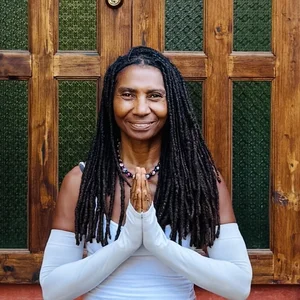
Master the Five Elements in Taoism. Discover the Generating and Controlling cycles, organ correspondences, emotions, and Qigong/Tai Chi moves in Universal Healing Tao.